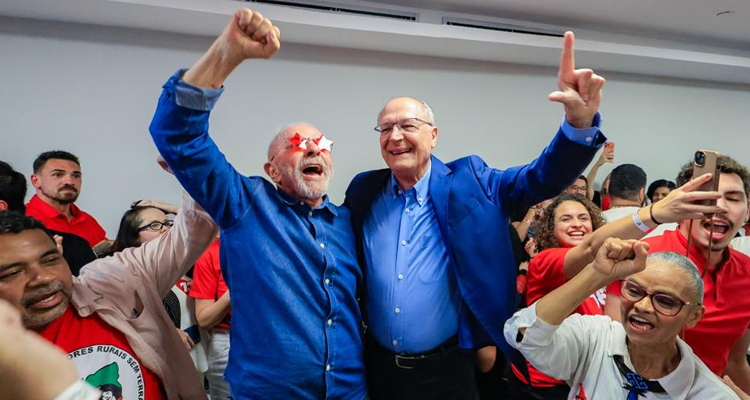
News Desk: Brazil’s veteran left-wing leader Luiz Inácio Lula da Silva has staged a remarkable political comeback, winning a fourth, non-consecutive presidential term after defeating far-right challenger Flávio Bolsonaro in a closely fought runoff election.
The 80-year-old president secured 51.79% of the valid votes, against 48.21% for Flávio Bolsonaro, the eldest son of former Brazilian President Jair Bolsonaro, according to the final results announced by Brazil’s electoral authority on Sunday. Lula won 64.25 million votes, defeating his rival by more than 4.43 million votes.
The victory marks another milestone in Lula’s political career and ensures that Latin America’s largest economy will continue under left-wing leadership. However, the narrow margin also underscores the deep ideological divisions shaping Brazil’s political landscape.
‘This Victory Belongs to the Brazilian People’
Reacting to his victory, Lula expressed gratitude to voters, young people and supporters who mobilised to defend democracy and his political agenda.
In a message on X, he thanked Brazilians who participated in the election, describing the result as a victory for people who believe in building a more just, sovereign and democratic country.
Lula’s win comes after a dramatic turnaround in the election campaign. Flávio Bolsonaro had finished ahead of Lula in the first round, but the incumbent president recovered ground during the runoff campaign through grassroots mobilisation and a stronger outreach to voters.
Minha gratidão eterna ao povo brasileiro, à juventude que tomou as ruas em defesa da democracia e a cada pessoa que fez um esforço imenso para votar e defender o futuro do nosso país.
Vocês me emocionam e renovam minha esperança. Essa vitória é de um povo que acredita, que luta e que não desiste de construir um Brasil mais justo, soberano e democrático.
Muito obrigado, Brasil!
Essa vitória é nossa. A vitória é do povo brasileiro!
📸 @ricardostuckert
— Lula (@LulaOficial) October 26, 2026
The result is also a setback for the political movement associated with Jair Bolsonaro, whose conservative and far-right base remains a powerful force in Brazilian politics.
Popularly known as Lula, Luiz Inácio Lula da Silva is one of Latin America’s most influential left-wing politicians. Born on October 27, 1945, in Garanhuns, in Brazil’s northeastern Pernambuco state, he grew up in poverty and worked as a metalworker before emerging as a prominent trade union leader during the 1970s.
He helped establish Brazil’s Workers’ Party (PT) in 1980, building his political identity around workers’ rights, poverty reduction and social welfare.
Lula first became president in 2003 and served two consecutive terms until 2010. His governments introduced social programmes that helped expand access to basic services and reduce poverty, earning him considerable support among lower-income Brazilians.
His political career subsequently suffered a major setback amid corruption investigations. He was imprisoned in 2018 following a corruption conviction but released in 2019. In 2021, Brazil’s Supreme Federal Court annulled his convictions on jurisdictional grounds, restoring his eligibility to contest elections.
Lula returned to the presidency in January 2023 after defeating Jair Bolsonaro in the 2022 election. His latest victory further consolidates a political career spanning more than four decades.
A Divided Brazil and Economic Challenges Ahead
Lula’s victory signals continued support for his emphasis on social protection, poverty alleviation, workers’ rights and reducing economic inequality. His administration is expected to pursue these priorities while seeking to strengthen economic growth and improve living standards.
However, the result also highlights the challenges confronting his government. With Flávio Bolsonaro winning 48.21% of the valid vote, the election demonstrated that the right-wing movement retains substantial electoral support.
Rising living costs, public expectations over economic performance and persistent political polarisation are likely to remain central issues during Lula’s new term. His ability to address voters’ economic concerns while maintaining support for social welfare programmes will be crucial to his administration’s success.
The close contest also suggests that bridging the divide between Brazil’s left and right will remain a formidable political challenge.
Climate Policy and Global Diplomacy in Focus
Beyond domestic politics, Lula’s presidency is expected to continue emphasising environmental protection, climate action and the preservation of the Amazon rainforest.
He has also advocated a stronger voice for developing countries in international institutions and sought to maintain Brazil’s diplomatic engagement with major powers, including the United States and China.
His government’s approach to international trade, climate negotiations and relations with global powers will remain important for Brazil’s economic and diplomatic priorities.
Lula’s fourth presidential term therefore represents both a personal political triumph and a broader test of his left-wing agenda. Having overcome a first-round deficit to defeat his rival, he now faces the challenge of translating electoral success into tangible improvements in the lives of Brazilians while governing a deeply divided country.